
Public sector banks (PSBs) posted 16.1 per cent year-on-year (Y-o-Y) growth in net profit at Rs 39,974 crore during the June 2024 quarter. While net interest income (NII) showed subdued growth of 7.1 per cent, provisions and contingencies declined by 10.5 per cent Y-o-Y. This aided the bottom line to show steady growth.

India's economy recovered faster than expected in the September quarter as a pick-up in manufacturing helped GDP clock a lower contraction of 7.5 per cent and held out hopes for further improvement on better consumer demand. The gross domestic product (GDP) had contracted by a record 23.9 per cent in the first quarter of the 2020-21 fiscal (April 2020 to March 2021) as the coronavirus lockdown pummelled economic activity.

'The biggest near-term risk to Indian equities is the outflow of investments to China as tactical trades by foreign investors.'

Novelis' Q3FY25 volume stood at 904,000 tonnes (down 1 per cent Y-o-Y, down 4 per cent Q-o-Q), due to lower VAP and automotive shipments. Revenue stood at $4.1 billion (+4 per cent Y-o-Y, down 5 per cent Q-o-Q).

India's largest drug maker Sun Pharmaceutical on Thursday posted a decline of 19 per cent year-on-year (Y-o-Y) for its consolidated net profit for the fourth quarter of the financial year 2025 (Q4FY25) at Rs 2,149.8 crore. Meanwhile, its revenue from operations rose by 8 per cent at Rs 12,958.8 crore.

Equity benchmark indices Sensex and Nifty settled higher on Thursday, powered by a rally in banking and power stocks amid a largely firm trend in global markets. The stock markets mostly traded range-bound in the absence of any major trigger and persistent foreign capital outflows, traders said. The 30-share BSE Sensex rose 144.31 points, or 0.18 per cent, to settle at 81,611.41.

Shares of Tata Consultancy Services (TCS) declined after the information technology (IT) major reported a 1.3 per cent sequential drop in net profit for the March quarter, prompting several brokerages to cut their target prices. The TCS stock fell as much as 1.26 per cent during the day to Rs 3,205 per share.

Among Sensex stocks, Wipro gained the most by 3.29 per cent. Ultratech Cement, Reliance Industries, Hindustan Unilever, Nestle, NTPC, M&M, HDFC Bank, ITC, Kotak Bank and Axis Bank were among the winners. On the other hand, HCL Tech fell the most by 1.24 per cent. SBI, TCS, Infosys, IndusInd Bank and Tata Steel also dropped.

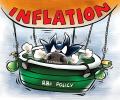
The Reserve Bank of India's (RBI's) caution on inflation, highlighted during the recent monetary policy meeting, may put investors' faith in fast moving consumer goods (FMCG) stocks to test, analysts said. They, however, believe FMCG stocks may ride through this near-term investor anxiety as related companies are, typically, well-equipped to handle inflation due to their pricing power and steady demand for essential goods.

After two weeks of buying, FPIs turned net sellers in Indian equities this week, with a net withdrawal of Rs 976 crore amid a strengthening US dollar and steady rise in US 10-year bond yields, impacting investor sentiment. Foreign Portfolio Investors (FPIs) began the week on a positive note, investing Rs 3,126 crore in equities during the first two trading sessions (December 16-20).

The headline for corporate profit growth has been very encouraging in the July-September quarter (Q2) of 2023-24 (FY24), with the combined net profit of listed companies up by 38 per cent year-on-year. However, the earnings distribution has been very lopsided, with most of the growth coming from public-sector oil-marketing companies (OMCs), banks, non-bank lenders, automobile (auto) companies, and cement producers. By comparison, companies from information technology services, fast-moving consumer goods (FMCG), retail, and consumer durables were disappointed, experiencing a sharp slowdown in net sales growth and a relatively muted increase in reported net profit.

The Ebitda margin, too, was lower than the expected 29.1 per cent.

The Mumbai-based real estate developer Oberoi Realty has been one of the top-performing companies in its segment and most brokerage remains bullish on the stock. The company's stock price is 52 per cent in the last 12 months beating the broader market by a huge margin. The benchmark BSE Sensex is up just 6.5 per cent during the period.

A Rs 525-crore contingency provision during the July-September period led to a 19 per cent fall in IndusInd Bank's share price on Friday (October 25). Contingency provisions are generally made when a lender expects more bad loans in the coming quarters. Shares of the bank on Tuesday (October 29) declined 1.53 per cent to settle at Rs 1,038.2 apiece on the BSE.

Its Board has declared a second interim dividend of Rs 5 and a special dividend of Rs 40 per equity share of Re 1 each of the company.

Corporate earnings got a big boost from the fall in commodity and energy prices in July-September 2023 (Q2FY24) despite a slowdown in revenue growth during the quarter. The combined net profits of 3,123 firms that have declared their results so far were up 38 per cent year-on-year (Y-o-Y) to Rs 3.07 trillion in Q2FY24, up from Rs 2.24 trillion a year ago. Earnings were, however, down 3.5 per cent on a sequential basis from Rs 3.18 trillion in April-June (Q1) FY24.
From the Sensex pack, Adani Ports & Special Economic Zones, Mahindra & Mahindra, Reliance Industries, HDFC Bank, Larsen & Toubro, NTPC, State Bank of India, UltraTech Cement and Kotak Mahindra Bank were the major gainers. In contrast, Tata Steel, Titan, Bajaj Finserv, JSW Steel, Bajaj Finance, Hindustan Unilever, ITC, Tata Motors and Tata Consultancy Services were among the laggards.

The market responded positively to the Q1 results of oil marketing companies (OMCs), Bharat Petroleum Corporation (BPCL) and Hindustan Petroleum Corporation (HPCL) despite numbers being weaker than consensus. BPCL's reported gross refining margin (GRM) was in line at $7.9 per barrel (bbl) in Q1FY25, which implies marketing margin stood at Rs 4.8 per litre. Standalone profit after tax or PAT at Rs 3,000 crore was down versus consensus due to under-recoveries in LPG business.

The country's largest software company Tata Consultancy Services (TCS) on Wednesday said its net profit increased 8.7 per cent year-on-year to Rs 11,342 crore in the September 2023 quarter. The Tata Group flagship had reported a net profit of Rs 10,431 crore in the year-ago period.

Equity benchmark indices Sensex and Nifty on Friday reversed their six-session losing streak and rebounded more than 1 per cent on value buying in auto, IT, financial and energy stocks. Better than expected quarterly financial results of corporates also boosted investor sentiments even as uncertainties persisted over the escalating tensions in the Middle East, according to analysts. In a largely range-bound trade, the 30-share BSE Sensex rose 634.65 points or 1.01 per cent to settle at 63,782.80 points.

Global trends, trading activity of foreign investors and domestic macroeconomic data announcements would dictate terms in the equity market in a holiday-shortened week ahead, analysts said. Equity markets would remain closed on Wednesday for Gandhi Jayanti. "Looking ahead, it will be interesting to monitor Foreign Institutional Investors (FIIs) and their flow into India.

Quarterly earnings from corporates, global trends, and trading activity of foreign investors will guide market sentiment this week, analysts said, adding that benchmark indices may face volatile trends. "The upcoming release of Q2 results will be closely watched, providing insights into corporate performance. "Meanwhile, the escalating tensions between Israel and Iran introduce a significant geopolitical risk, potentially leading to increased oil prices and market volatility.

The growth in personal loans for fintech major Paytm may remain muted in the future and not replicate a three-digit year-on-year (Y-o-Y) growth that it recorded in the previous years, a person familiar with the matter said. Sources said the personal loans book may grow in the range of 30 to 40 per cent Y-o-Y on its current base. On a quarter-on-quarter (Q-o-Q) basis, the number of personal loans the Noida-based fintech company disbursed has dropped 20 per cent from 0.3 million in the first quarter of this financial year (Q1FY24) to 0.24 million in Q2FY24, according to regulatory filings.

The pre-sales volume of Godrej Properties (GPL) for third quarter of the financial year 2025 (Q3FY25) declined 6 per cent year-on-year (Y-o-Y) -- down 21 per cent quarter-on-quarter (Q-o-Q) -- to 4.1 million square feet (msf), resulting in a pre-sales value of Rs 5,450 crore, down 5 per cent each Y-o-Y and Q-o-Q. About 77 per cent came from newly launched projects. For 9MFY25, pre-sales were up 48 per cent Y-o-Y to Rs 19,300 crore.

Cement manufacturers have hiked prices after a challenging Q1FY25, and Q2FY25 (so far) when general elections and seasonal factors cut down on construction activity. The August prices are currently around 3-6 per cent above July 2024 but may not be sustainable in the face of weak demand. H2FY25 may see realisation growth which, if it happens, would drive average operating profit/tonne improvements in H2FY25 over a muted H1FY25.

Union Finance Minister Nirmala Sitharaman's call for making lending rates affordable may not resonate anytime soon as banks still struggle with margin compression, and await clues from the Reserve Bank of India (RBI) on liquidity and rate action. Hinting that any lending rate cut was some time away, State Bank of India (SBI) managing director Vinay M Tonse said there was still some aggression in the market regarding deposit pricing.
Das said that global economic activity has remained fragile and the surge in COVID-19 cases has subdued early signs of revival.

Quarterly earnings of corporates, trading activity of foreign investors and inflation data are the key factors that are expected to drive the momentum in the equity markets this week, analysts said.

Home appliance maker Crompton Greaves Consumer Electricals reported better than expected performance in the second quarter (Q2) of 2024-25 (FY25), outperforming peers due to a strong showing in the electrical consumer durables (ECD) segment. The company's standalone sales rose by 10.5 per cent, while the ECD segment continued its growth momentum with a 12.5 per cent increase in revenues, driven by volume and pricing gains.

Brokerages expect India Inc to report an upturn in earnings for the March quarter of 2022-23, after a relatively muted showing in the previous two quarters. This growth is expected to be led by banking, financial services and insurance (BFSI) companies, FMCG firms, and automobile makers. The combined net profit of the Nifty50 companies (excluding Adani Enterprises) is expected to have grown 15.6 per cent to Rs 1.77 trillion in Q4FY23, from Rs 1.53 trillion a year ago.

Due to unseasonal rains, the second quarter of financial year 2023-24 (Q2FY24) was disappointing for the room-air conditioner (RAC) segment and Q3FY23 was also slow. While general consumption demand was low in Q3FY24, the low base and the pent-up demand from the first half of financial year 2023-24 (H1FY24) seem to have driven an off-season demand for RACs.

Apple grew at a strong double-digit rate in India, hitting a new March quarter revenue record in an "incredibly exciting market", even though the tech titan's overall quarterly revenue declined 4 per cent. Apple's India showing earned praises from CEO Tim Cook who described the market here as a "major focus" and said Apple is working on the entire ecosystem from developer to the market to operations. The top honcho said he is "very pleased" with the growth numbers.

'Retail investors, who had not seen such a massive correction in the SMID universe since COVID-19, are witnessing something like this for the first time. Panic profit booking may continue.'

Even as the slowdown in the information technology (IT) services sector deepens, banking, financial services and insurance (BFSI), as well as oil and gas companies, emerge as the primary drivers of corporate earnings in the country. The IT services sector's share in corporate earnings declined to a five-year low of 17.4 per cent in the second quarter (Q2) of 2023-24 (FY24), whereas banks and finance companies accounted for 46.5 per cent, and oil and gas firms contributed 16.8 per cent. At their peak, IT services firms like Tata Consultancy Services (TCS), Infosys, HCLTech, and Wipro represented just over a third of the combined net profit of all listed companies in the Business Standard sample.

Most global as well as domestic brokerages are upbeat on India's largest IT services provider, Tata Consultancy Services (TCS), despite its performance during the December quarter of FY25, when it missed Street estimates. On the bourses, the TCS share price rallied as much as 6.44 per cent to hit an intraday high of Rs 4,296.80 apiece, before settling 5.67 per cent higher at Rs 4,265.55.

Consolidated revenue rose to a record Rs 163,854 crore.

With crude palm oil prices on the rise, companies have started to jack up rates of soaps and edible oils in order to pass on the hike to consumers. Crude palm oil, one of the main ingredients in the manufacture of some consumer goods, saw a price rise of 45.2 per cent in the last three months. One of the country's largest consumer companies, Hindustan Unilever, said it has already started to take price increases in the skin cleansing category.

The July-September quarter (Q2) results for 2024-25 (FY25) from the largest listed consumer electrical solutions companies, Havells India and Polycab India, followed similar trends, demonstrating robust revenue growth while falling short of profitability expectations. Both companies witnessed overall growth in the 16-30 per cent range, but margins declined by 130-290 basis points (bps) year-on-year (Y-o-Y). Although brokerages are bullish on long-term prospects and have raised revenue projections, earnings forecasts have been revised downward due to margin pressures.
